

When I first embarked on After The Rain a year ago, I didn’t think it would become a magazine, let alone an arts festival project in London.
“River to river, coast to coast” happened at the right time with the right cohort of artists – Mark King from The Point magazine, Kate Lowe and Natalie Cronin from Re:Centre Artists-In-Residence – and Story Of Books’ generous partners, Re:Centre London and HF Arts Fest.
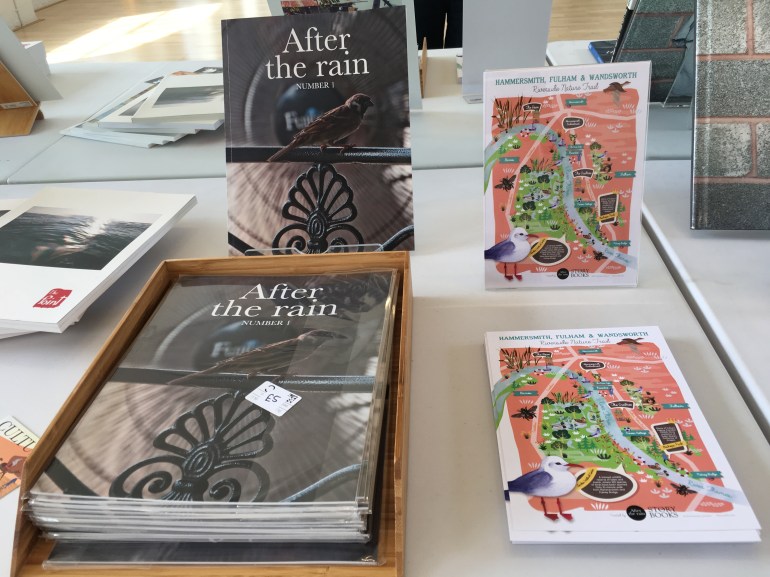
When Story Of Books were invited by Flora Herberich from HF Arts Fest to propose a project in February, it didn’t take long for us to decide on the waterway theme because the borough of Hammersmith & Fulham is situated right by the river Thames.
That also meant that the photo magazine I’d been planning needed to happen. To make the June 8th deadline, it had to be a 32-page magazine, not a 104-page as I originally planned. And oh, zero time to raise sponsorship, plan for paper stock, pricing, distribution, etc. I almost give up actually.
But something miraculous happened. Mark King said yes to our invitation. He agreed to travel up from Croyde, Devonshire to London to present his work. Re:Centre Artists-In-Residence agreed to take part after they saw a copy of The Point magazine and my draft printout of After the Rain, Number 1. It turned out that they have been working on a group project, “Thamesis” that will be debuted at the Thames Festival in September 2019.
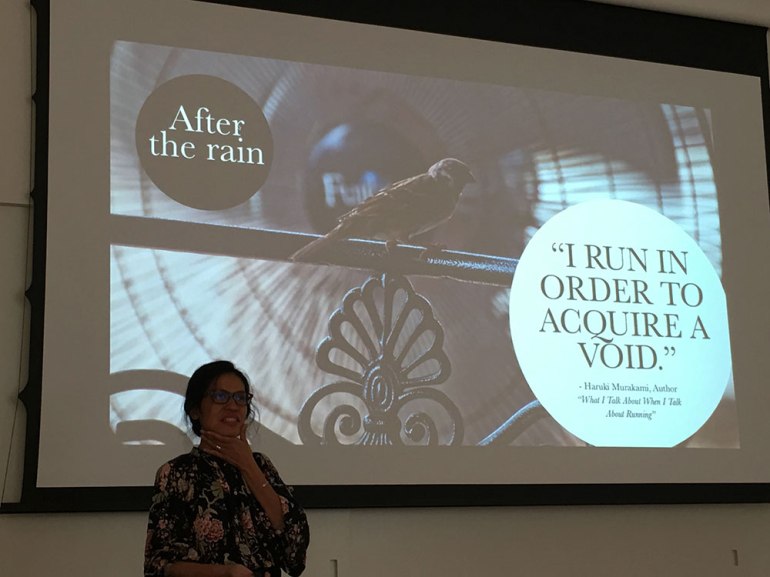
So that was kick up my backside I needed to put together Number 1. I was fortunate that have a brilliant editor, Salina Christmas, which is a luxury for a self-publish project.
Steven Lee from Kuala Lumpur Photoawards kindly lent his foreword, “The way to win someone’s heart is usually through some act of kindness or love, and After The Rain has a similar intention, but through the medium of photography and personal recollection of memories of Zarina Holmes.” I’m glad he summed it up like that, because I usually can’t see the woods from the trees while I’m developing my personal project.
I learned a lot from the artists and the questions from the audience. “Don’t squander the megaphone,” said Kate Lowe, a former ad industry creative who now paints and create stunning river-inspired installations at the Re:Centre artists’ workshop. According to Natalie Cronin everything around us contain bones and bones become sand. Her ‘bone-to-pick’ demo and installations resonated deeply with the audience.
Finally, I learned from Mark King that magazine publishing is marathon, not a sprint. The act of making is activism in itself. The ocean teaches us is that the only constant is the waves and the only way forward is to ride it.
While Story Of Books was campaigning for this event between March and June 2019, the Malaysian government decided to return the illegal plastic wastes back to their country of origins. It was a huge victory for the environment. A proof that our collective voices are heard if we are organised enough to make a point about it.
Plastic packaging is deeply embedded in the business scaling system and no one has seriously put enough effort to provide the cash-strapped traders with a sustainable alternative.
The final result of After The Rain is beautiful, but there is a huge room for improvements. To begin with, I’d prefer the magazines that were printed by Blurb arrived without the individual plastic wrappings. I understand that most of the fine print products such as postcards and posters are distributed inside plastic films for protection purpose. But we could be better. In the future, I also would like it to be more accessible to the readers in Southeast Asia. But I need sponsors and do more research on suppliers for that.
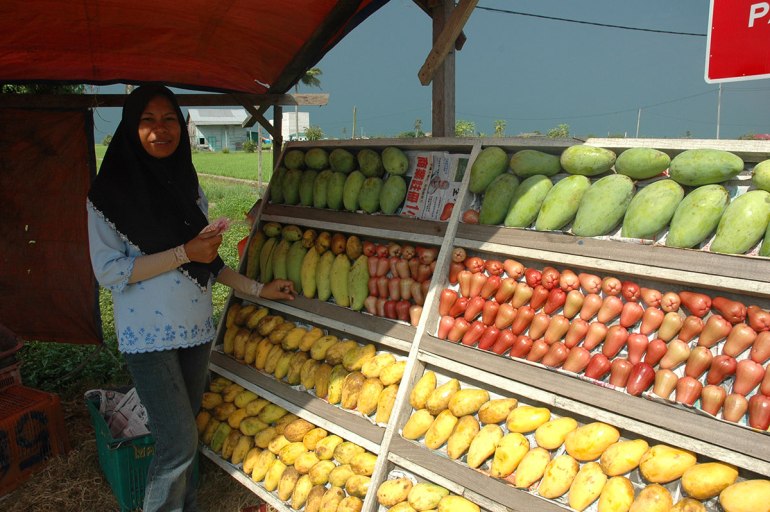
In a way – by making After The Rain, I am walking in the shoes of the roadside stall traders that I photographed. I understand now why they resorted to plastics; they’re cheap, readily accessible and easy to distribute, despite the short-term benefit. Plastic packaging is deeply embedded in the business scaling system and no one has seriously put enough effort to provide the cash-strapped traders with a sustainable alternative.
Finally, I learned from Mark King that magazine publishing is marathon, not a sprint. The act of making is activism in itself.
It made me feel ashamed to be a part of the commercial creative community. We had sold out to the industry by using a material that lasts forever in a throwaway, mass-consumption culture.
Pointing fingers and raging about it on social media is not the same as actively taking action to change the system. It’s just noises, at the end of the day, that distract us from doing things that matter.
So, as Haruki Murakami puts it, I have to keep running to acquire my void.

 After The Rain